Love vs. the League: Who Actually Played Better, Jordan Love or Caleb Williams?
I graded every Jordan Love and Caleb Williams dropback from the Packers’ Wild Card loss. Did the film tell the same story as the final score?
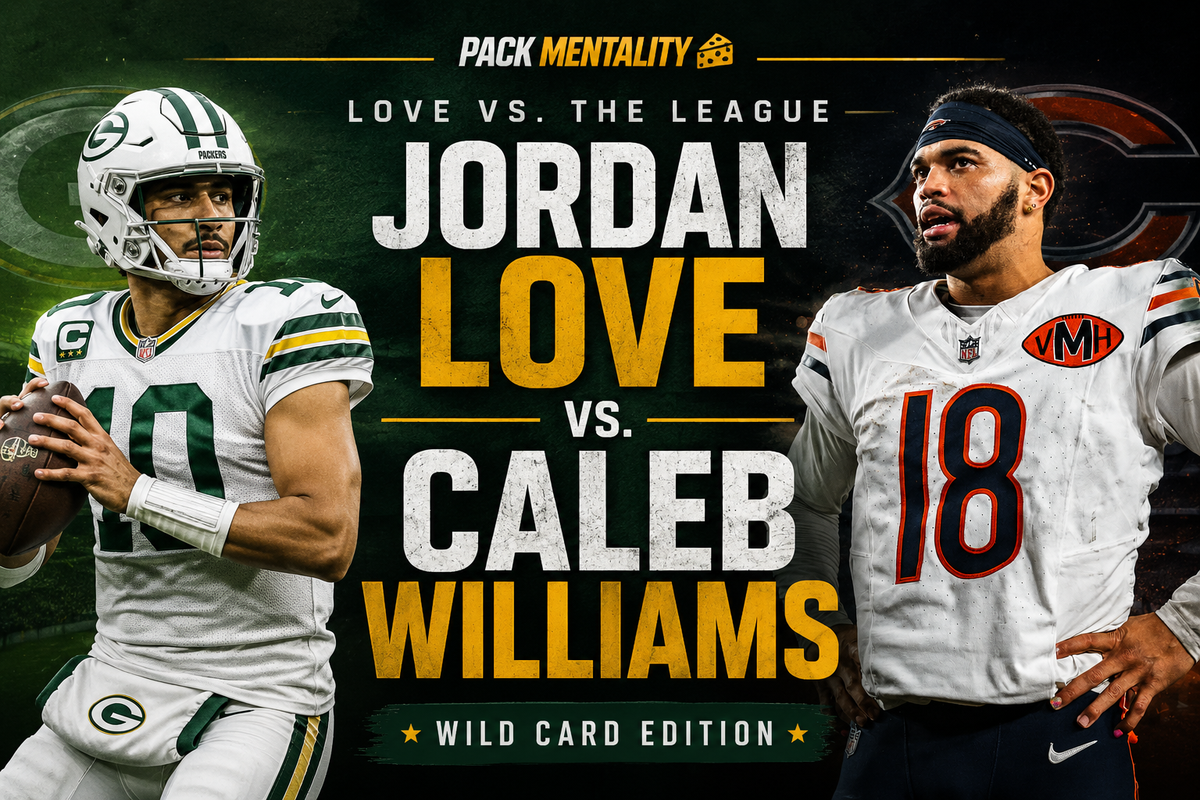
This is Love vs. the League, a new weekly series from Pack Mentality built around one simple question: How did Jordan Love actually play compared to the QB on the other sideline?
Every week, I’ll go through the All-22 and grade every single Jordan Love dropback, as well as every dropback from the opposing team’s QB, then put the two performances head-to-head. Along the way, I’ll also build the Jordan Love Index, a season-long rating designed to track the quality of Love’s play beyond the box score, wins and losses, and the narratives that inevitably follow every Packers game.
The 2026 season hasn’t started yet, so consider this the preseason edition, a chance to sample the goods and get a taste of what’s to come once the season begins. With all the offseason comparisons surrounding Jordan Love and Caleb Williams, I decided to make the first edition of Love vs. the League the Packers’ Wild Card loss to the Bears.
It’s a particularly painful place to start, and I promise, revisiting this game was no walk in the park for me. Packers fans pretty consistently claim Love outplayed Williams while putting the blame for the collapse on the defense and special teams. Bears fans claim Jordan Love was “mid” and not clutch while Caleb played like a superstar.
There was a dramatic comeback, and the final result makes it easy to remember the night as a triumph for Williams and a failure for Love. But I couldn’t help but dig deeper and try to figure out who the better QB actually was on that extremely unpleasant eve.
A Quick Note on the Grading
Before getting into the film, a little context on how I’m grading these plays.
Every passing dropback gets a grade from -3 to +3.
A zero is basically what I expect every NFL quarterback to make. If a QB makes an exceptionally easy throw that any starting quarterback should make he probably isn’t getting extra credit for it. On the other hand, if he makes a difficult throw with anticipation and perfect placement while getting drilled by a defensive lineman he’s going to get rewarded for it even if the play ends poorly for his team.
The scale moves from there in either direction, with +3 reserved for truly exceptional quarterback play and -3 when a QB decides to go full Will Levis. Never go full Will Levis.
Most importantly, I'm grading the quarterback, not the outcome of the play.
If Love puts a perfect deep ball in a receiver's hands and he drops it, Love isn't getting punished for the drop. Likewise, a receiver taking a screen 70 yards doesn't mean I'm giving the quarterback +3 for completing a pass behind the line of scrimmage.
There's obviously some subjectivity involved. I don't know the play call or every player's assignment, and there are going to be plays where it's impossible to know exactly what the quarterback was supposed to do. When that's the case, I'll try not to pretend I know something I don't.
With that out of the way, let's get into the tape.
Jordan Love
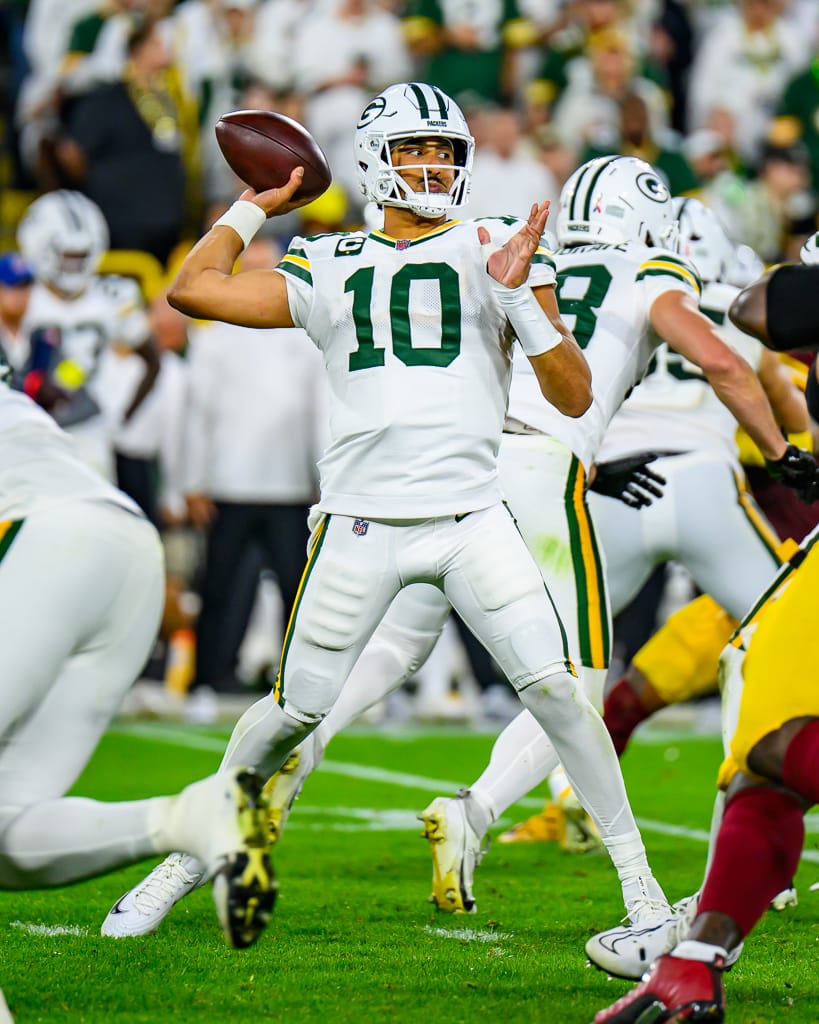
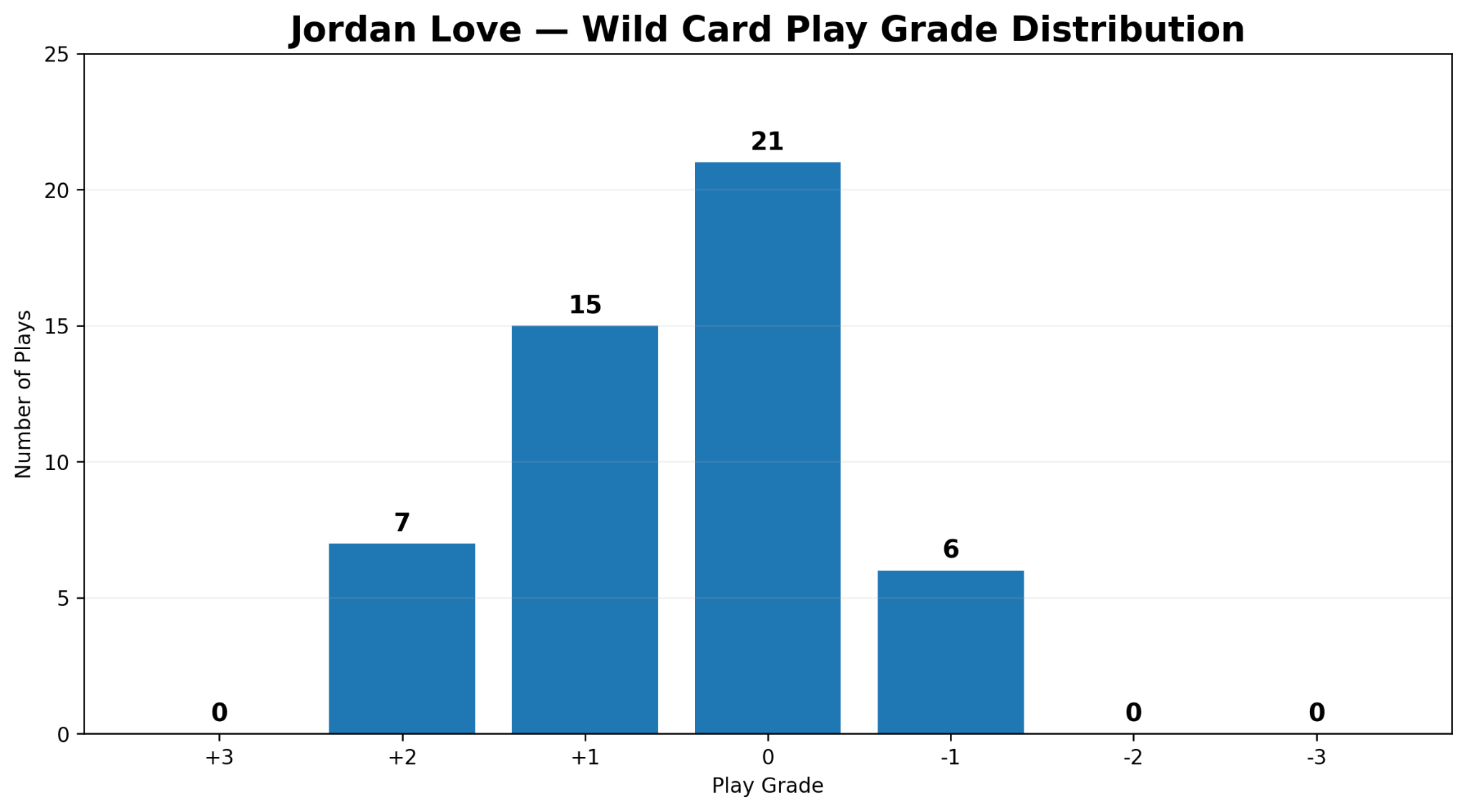
Jordan Love finished the game 24/46 for 323 yards and 4 TDs, with a gaudy 103.8 passer rating. Even the saltiest Bears fan would be hard-pressed to argue that Jordan Love was outright bad in this game, but I was curious to see if the All-22 painted the same picture as the numbers.
Overall, Jordan Love dropped back to throw 49 times in this game and, by my count, only had six dropbacks that were negative. There weren’t many stretches where I thought Love was actively hurting the offense. More often, I found myself writing down some version of “good read,” “great ball” or “not much he could do there.” Several of his throws were simply outstanding.
The first half of the game was a masterclass. Love was effortlessly finding the most open guy on a consistent basis and dropping dimes all over the field. It’s also worth noting that the play design for the Packers, particularly in the first quarter, was outstanding. Matt LaFleur was really in his bag, and guys were streaking wide open all over the field. Love was often able to get the ball out quickly to his first read, which made his job much easier.
One thing that stood out to me about his first half was that he consistently had a great risk profile on his throws. He was taking some aggressive shots, but they were well-thought-out decisions to thread the ball into tight spots where his receivers had the edge. He had 18 dropbacks and zero negative plays in the first half.
When I put on the second half, I braced myself for the trauma that was sure to come. While that trauma did arrive, it was rarely Jordan Love who delivered it.
What really stood out to me in the second half was that the offense wasn’t doing much, but they also didn’t really try to do much. The narrative that the Packers simply started running the air out of the ball isn’t correct. Of Love’s 49 dropbacks, a whopping 31 of them came in the second half.
While they were still airing it out, I found myself noticing that Love would often look at one WR and, if he wasn’t extremely open, simply throw the ball away or check it down. For much of the half, gone was the guy who was perfectly layering the ball through two defenders and taking calculated risks. In came a guy who seemed determined not to risk anything at all.
The lack of risk-taking also correlated with Chicago blitzing incredibly effectively in the second half. When watching the film of both QBs, it was absolutely staggering to see the difference in the pressure each was dealing with. Caleb often got to sit back in the pocket and patiently go through his progression, while Jordan Love was not afforded close to the same luxury.
Quite simply, the offensive line does not get enough blame for this loss. They jumped off the screen to me as probably the biggest contributing factor to the collapse.
Risk taking Love came back alive once the Packers absolutely needed to score again and, unfortunately for us, not a second sooner. From dropbacks 19–26, Love only recorded two +1s, with the rest grading as 0s. Once the Bears cut the lead to just five, he proceeded to pepper in a bunch of +1s and +2s.
To me, that likely shows there was a significant philosophy shift when the team went from protecting the lead to trying to win, and I don’t think the “protecting the lead” philosophy served them well at all in this game.
Love is quite simply at his best when he’s playing free and taking some chances. There’s a reason he was so good when the Packers absolutely had to have it last year. Love finished second in the NFL in EPA per play on third and fourth downs, and on third-and-long he tied for the league lead with 30 first downs or touchdowns. More often than not, when Love allows himself to take risks and is forced to make something happen, he does exactly that.
Caleb Williams
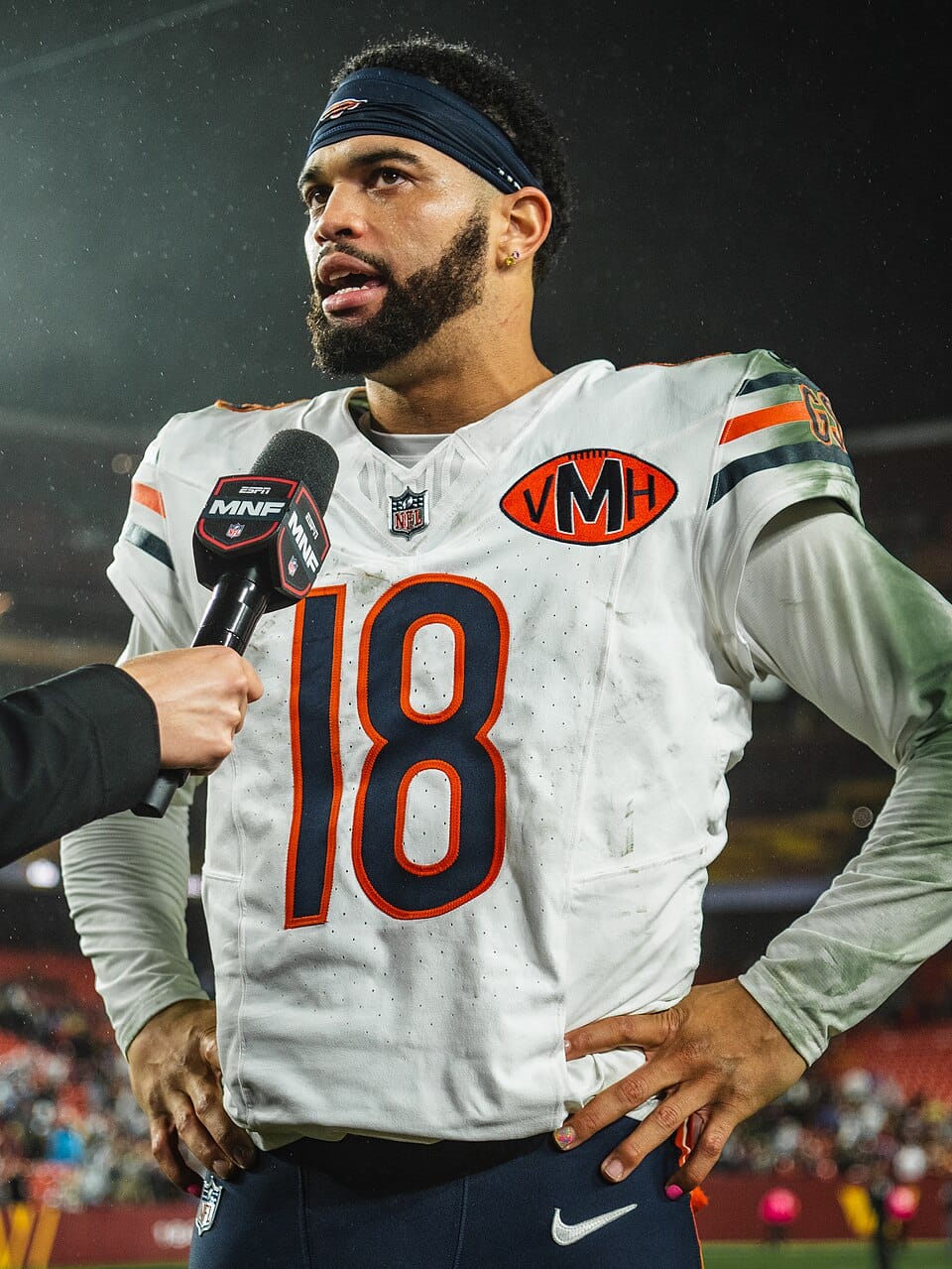
Caleb Williams finished the game 24 of 48 for 361 yards with 2 TDs and 2 INTs, with a passer rating of only 71.6. His passer rating is pedestrian, but I don’t think that number was very representative of his play, as it docks him heavily for his two interceptions, both of which came on fourth down and weren’t that bad.
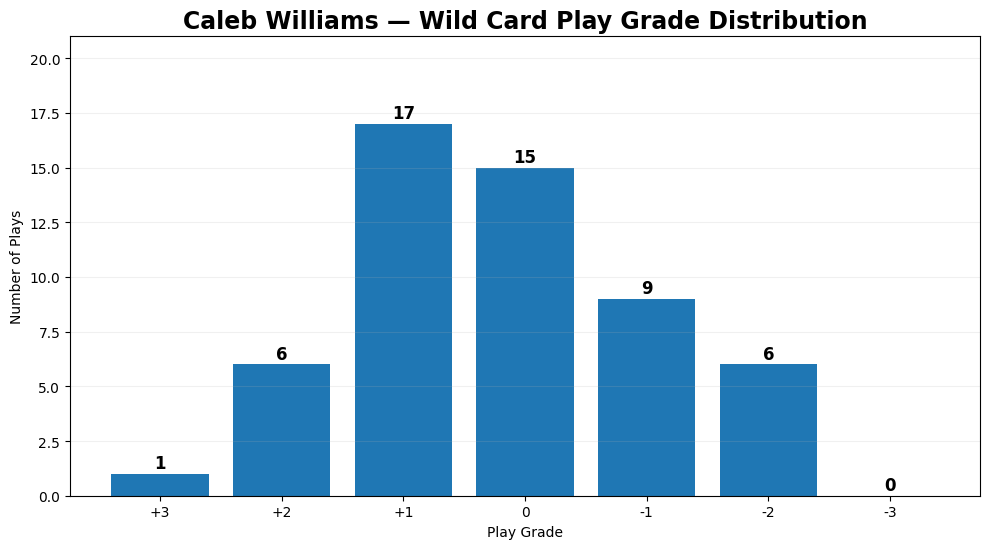
Caleb had 54 dropbacks, 15 of which received negative grades. His highs in this game were higher than Jordan Love’s and his lows were lower. My notes were littered with phrases like “he is an absolute magician” followed immediately by “how on earth did he miss that throw?” At times, it felt like the more Ben Johnson would scheme Caleb’s first read open, the more negative plays he would compile.
On the flip side, he really impressed me with his patience and willingness to go through his progression when his first read was taken away. He often turned those situations into positive plays over and over again in this game.
I expected to come away from the first half thinking Caleb had played poorly. He had 19 dropbacks in the first half and only five negative plays. Given the scoreboard, I expected more of his negative plays to come in the first half, but the Bears had some solid drives that stalled out on fourth down. He graded negatively on both of those fourth downs, but the play calls also didn’t do him any favors, as both were blown up.
I expected to be blown away by his second-half performance. I remember how much physical pain watching that second half gave me, and I expected the majority of it to come from Williams’ right arm.
That also wasn’t entirely the case when I went back through the film.
Williams had a whopping 35 dropbacks in the second half, and of his 15 negative plays, 10 of them showed up in this half. There were plenty of times where he threw the ball into the dirt or sailed a ball past an open receiver for seemingly no reason.
To go with the misses, though, there was also a highlight reel for the ages, including the fourth-down pass to Odunze that could have easily gone down as a +6 if the scale allowed for such things.
One thing that really stood out when watching this half was just how inept the Packers’ defensive line was. Williams had dozens of dropbacks where he just had all day in the pocket and was able to patiently assess his different options and allow big plays to develop.
To his credit, he processed these opportunities with amazing patience and discipline and very regularly found the most open guy or made one of the best decisions available to him.
Nonetheless, it was staggering to see the disparity in time afforded to both QBs, and I think that was the major deciding factor in the Bears winning the second half the way they did.
So Who Actually Played Better?
This was the question that started the whole exercise, and after watching both quarterbacks I can’t say it was completely decisive despite what my numbers say.
If you asked me who made the most impressive plays in this game, I would say Caleb Williams. His best plays were ridiculous. There were moments where he looked like an absolute magician and did things that very few quarterbacks in the NFL are capable of doing.
But that isn't the same thing as playing the better game.
Love was considerably more consistent. Of his 49 dropbacks, I only graded six negatively. Williams had 15 negative plays on 54 dropbacks. That was ultimately the biggest difference between the two for me. Caleb would make a spectacular play and then seemingly miss an easy throw on the next dropback. Love didn't have as many of the breathtaking off-script plays, but he also rarely gave anything back and dropped plenty of his own dimes.
The circumstances each quarterback was playing under also looked dramatically different on film. I don't want to punish Williams for having good protection, and I'm certainly not giving Love bonus points just because his offensive line struggled, but it's impossible to watch both performances back-to-back and not notice it. Williams was regularly afforded the time to sit in the pocket, work through his progressions and wait for something to develop. Love spent much more of the second half dealing with immediate pressure and an extremely effective Bears blitz.
Then there was the strange change in Love's aggressiveness. For a large portion of the second half, it felt like I was watching a different quarterback than the one I watched in the first. The aggressive throws disappeared. He wasn’t making mistakes, which should have been enough to keep the substantial lead, but he wasn’t doing everything in his power to end the game, either.
Once Chicago made it a five-point game and Green Bay actually needed Love to make something happen again, that changed. Suddenly the +1s and +2s started magically showing up again.
Whether that was Love himself becoming conservative or a philosophical decision from the coaching staff is impossible for me to know from the All-22. But I don't think Green Bay's attempt to protect the lead did him any favors.
After grading all 103 dropbacks, here's where I landed.
LOVE vs. THE LEAGUE
Wild Card Edition
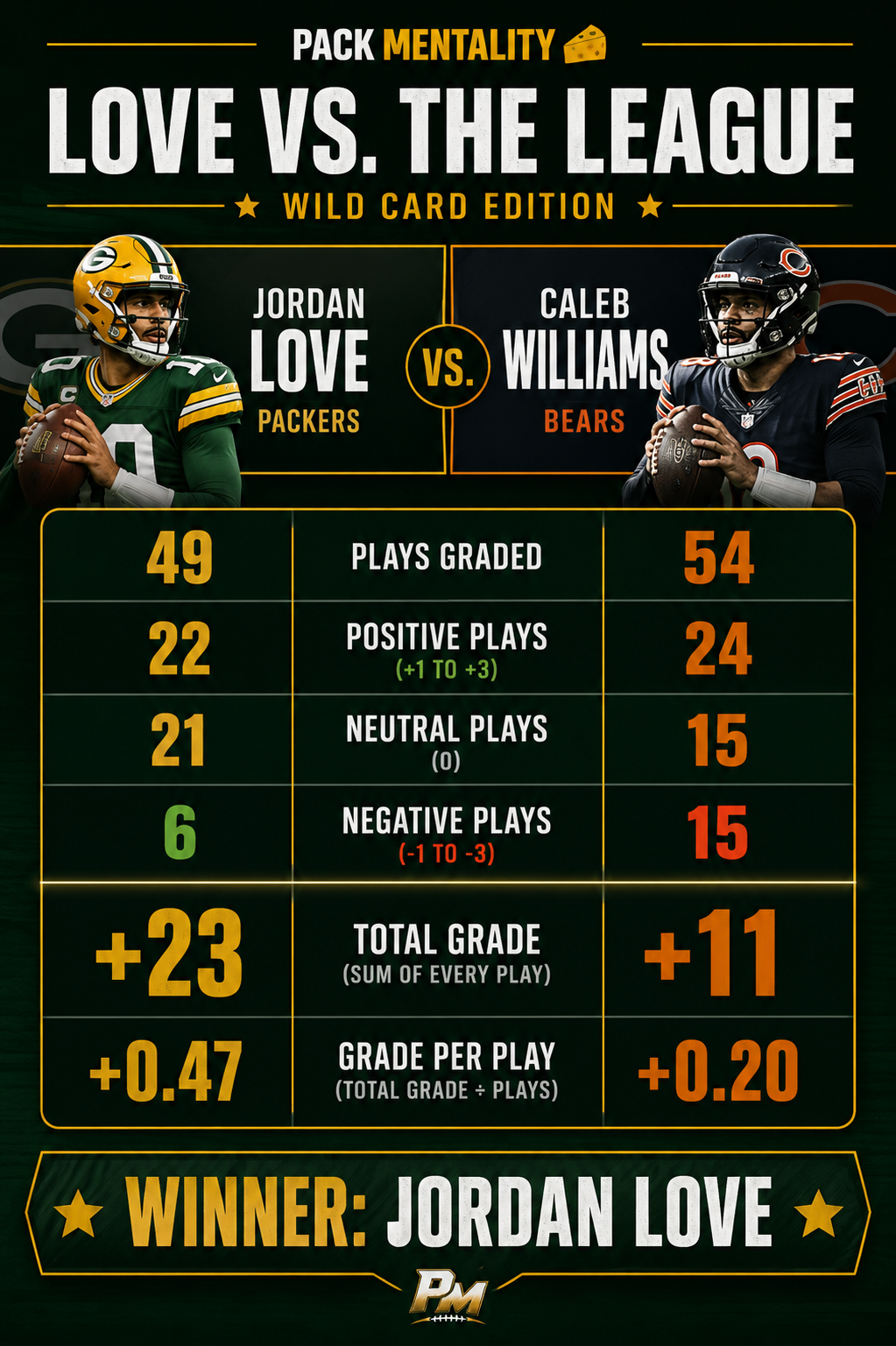
The final numbers actually capture what I thought I saw on film pretty well.
Caleb had more positive plays than Love, which I think is important. He made a ton of good plays in this game, and anyone arguing that he played poorly because of the 71.6 passer rating is probably just a hater.
The difference was what happened on the other plays.
Love had 22 positive plays and only six negatives. Williams had 24 positives, but those came with 15 negatives. Love's performance was much steadier, while Caleb's was far more volatile.
That's probably the simplest way I can describe the two performances: Caleb had the higher ceiling from play to play. Love had the higher floor.
And over the course of the entire game, I thought Love's consistency won out. That being said if Caleb Williams can figure out how to make the routine throws routinely he is going to become a big problem.
What Does This Mean for the Jordan Love Index?
For now, absolutely nothing.
This game won't count toward the 2026 Jordan Love Index. This was a test run for Love vs. the League.
Once the regular season begins, the slate is wiped clean.
Every Love dropback will contribute to his season-long grade, and every week I'll be able to compare his performance not only to that week's opposing quarterback, but to his own performance over the course of the season.
I'm also intentionally holding off on assigning a 0–100 grade until I have enough data to feel comfortable with what those numbers actually mean. I could decide right now that +0.47 per play is an 87 or a 91, but that would be completely arbitrary.
I'd rather let the data build and allow the scale to develop with it.
Final Thoughts
The Bears won the game. Caleb Williams led the comeback. Nothing I found on the All-22 changes either of those things.
But if the question is simply which quarterback played better, In my opinion it was Jordan Love.
Love vs. the League — Wild Card Edition
Jordan Love: +23 (+0.47/play)Caleb Williams: +11 (+0.20/play)
Winner: Jordan Love.
Comments ()